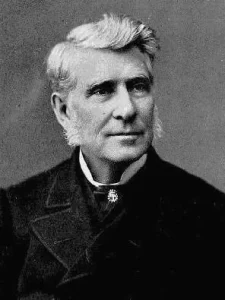
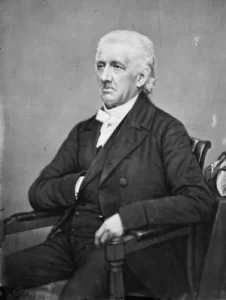
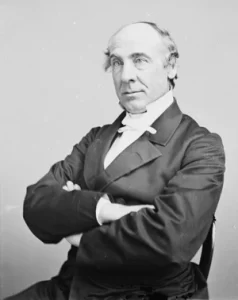
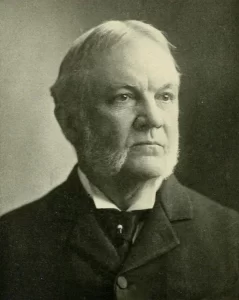
Since the Society’s founding in 1805, NES Members have included notable individuals from law, politics, finance, industry, journalism, education, the arts and philanthropy. Distinguished Members are added to the roster on a regular basis; please check back soon for updates.
NES continues to research its historic beginnings using a variety of primary and secondary sources located in the NES office, the New York Public Library, and the New York Historical Society, and strives for accuracy on this page and the rest of the NES website. Please e-mail the Society office at nes@nesnyc.org or call (212) 752-1938 with corrections, questions, or ideas for additions to this list.
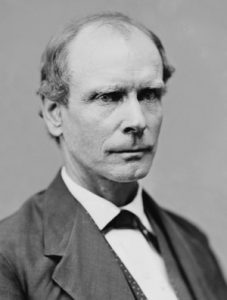
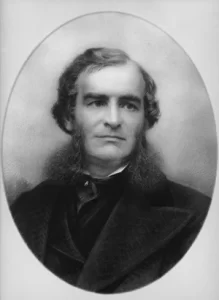
Amos Tappan Akerman
February 23, 1821 – December 21, 1880
U.S. Attorney General under President Ulysses S. Grant
Honorary Member
Admitted: 1877
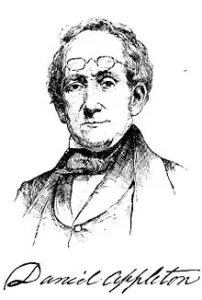
Daniel Appleton
December 10, 1785 – March 27, 1849
Founder of the publishing house D.A. Appleton & Co.
Regular Member
Admitted: 1843
William H. Appleton
January 27, 1814 – October 19, 1899
Publisher who was active in the struggle for international copyright laws, and president of the American Copyright League.
Life Member
Admitted: 1856
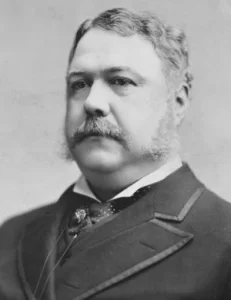
Chester A. Arthur
October 5, 1829 – November 18, 1886
21st President of the United States.
Honorary Member
Admitted: 1866
William H. Aspinwall
December 16, 1807 – January 18, 1875
Founded the Pacific Mail Steamship Company. Established the Society for the Prevention of Cruelty to Animals. Founder of the Metropolitan Museum of Art.
Honorary Member
Admitted: 1868
Irving Bacheller
September 26, 1859 -February 24, 1950
Journalist, editor and writer who founded the first modern newspaper syndicate in the United States. Served as a war correspondent in France during WWI. (45th NES President)
Regular Member
Admitted: 1906
Leonard Bacon
February 19, 1802 – December 24, 1881
Editor of the Christian Spectator. Helped to found the New Englander (later the Yale Review) and the Independent.
Honorary Member
Admitted: 1870
George Bancroft
October 3, 1800 – January 17, 1891
Historian and U.S. Secretary of the Navy. Established the U.S. Naval Academy at Annapolis in 1845. Founding member and first President of the American Geographical Society.
Honorary Member
Admitted: 1866
Frederick A.P. Barnard
May 5, 1809 – April 27, 1889
Tenth President of Columbia College and advocate for women’s education. Barnard College is named for him.
Honorary Member
Admitted: 1870
Alfred Smith Barnes
January 28, 1817 – February 17, 1888
Philanthropist and a major benefactor of Cornell University. His company, A.S. Barnes & Co., was leading publisher of textbooks.
Life Member
Admitted: 1864
Lyman Beecher
October 12, 1775 – January 10, 1863
Minister and founder of the American Temperance Society. Father of Harriet Beecher Stowe and Henry Ward Beecher.
Regular Member
Admitted: 1835
Henry Whitney Bellows
June 11, 1814 – January 30, 1882
Clergyman, planner and president of the U.S. Sanitary Commission. Organizer of the Union League Club of New York and the Century Association, and assisted with the planning and establishment of Cooper Union.
Honorary Member
Admitted: 1870
Cornelius Newton Bliss
January 26, 1833 – October 9, 1911
Merchant, politician and art collector. U.S. Secretary of the Interior and as Treasurer of the Republican National Convention in four successive campaigns. Invited to serve as William McKinley’s Vice-President, but refused, and Teddy Roosevelt was subsequently chosen. A year later, McKinley was assassinated and Roosevelt became President. 25th NES President.
Regular Member
Admitted: 1869
William T. Blodgett
February 18, 1824 November 4, 1875
Art collector and trustee and founder of the Metropolitan Museum of Art
Regular Member
Admitted: 1864
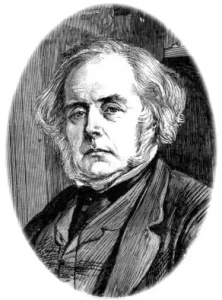
John Bright
November 16, 1811 – March 27, 1889
Orator, Quaker, British Radical and Liberal statesman. Served in the House of Commons from 1843-1889.
Honorary Member
Admitted: 1877
Henry Sands Brooks
September 8, 1772 – December 21, 1833
Founder of Brooks Brothers, the men’s clothing store, which was known for introducing ready-to-wear suits to U.S. customers and designing uniforms for elite regiments of the New York National Guard and New York State troops during the Civil War.
Founding Member
Admitted: 1805
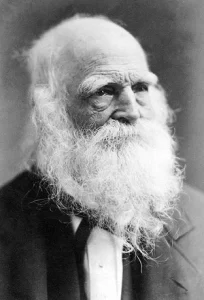
W.C. Bryant, Esq.
November 3, 1794 – June 12, 1878
Poet and editor of the New York Evening Post. Led the movement to establish Central Park. Bryant Park is named for him.
Honorary Member
Admitted: 1829
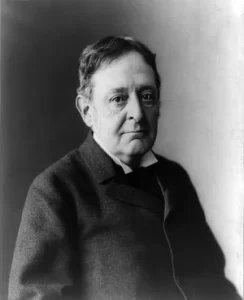
Joseph Hodges Choate
January 24, 1832 – May 14, 1917
Lawyer and diplomat. President of the American Bar Association, the New York State Bar Association and the New York City Bar Association. U.S. Ambassador to the United Kingdom. 15th NES President.
Regular Member
Admitted: 1856
Lewis Gaylord Clark
October 5, 1808 – November 3, 1873
Editor and publisher of The Knickerbocker magazine.
Life Member
Admitted: 1852
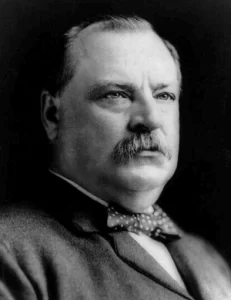
Grover Cleveland
March 18, 1837 – June 24, 1908
Twenty-second and 24th President of the United States. Governor of New York.
Honorary Member
Admitted: 1885
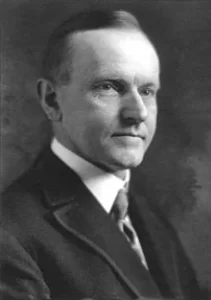
Calvin Coolidge
July 4, 1872 – January 5, 1933
Governor of the State of Massachusetts, and 30th President of the United States.
Honorary Member
Admitted: 1922
Elliot C. Cowdin
August 9, 1819 – April 12, 1880
President of the Mercantile Library Association of Boston; Officer of the New York Chamber of Commerce; United States Commissioner to the Exposition in Paris in 1867. NES President, 1871.
Regular Member
Admitted: Unknown
Charles Dana
August 8, 1819 – October 17, 1897
Journalist, and owner and editor of the New York Sun.
Regular Member
Admitted: 1858
Chauncey Depew
April 23, 1834 – April 5, 1928
Attorney for Cornelius Vanderbilt, President of the New York Central Railroad System, and U.S. Senator from New York (1899 to 1911).
Honorary Member
Admitted: 1892
Major John A. Dix
July 24, 1798 – April 24, 1879
Secretary of the Treasury, U.S. Senator, and the 24th Governor of New York. Union major general during the Civil War.
Honorary Member
Admitted: 1864
All images are in the public domain via Wikipedia or the Library of Congress unless otherwise noted.